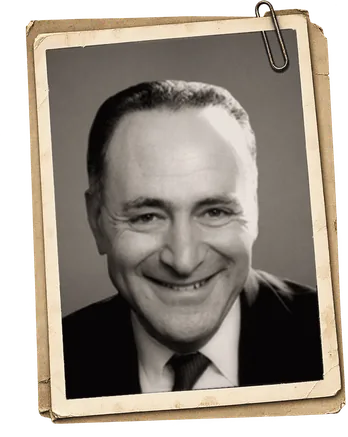
This is the dominant driver of Schumer's score.
Through 2014, his three largest career contributors were Wall Street banks — Goldman Sachs, Citigroup, and JPMorgan Chase — and securities and investment was his largest contributing industry, at more than $10.4 million, according to the Center for Public Integrity's analysis of OpenSecrets data. In the first nine months of 2009 he received roughly 15 percent of the $10.6 million Wall Street gave to Senate campaigns, nearly double the next senator, as summarized by Newser; Politico reported that private-equity, hedge-fund, and venture firms gave him more than $707,000 in the 2010 cycle, nearly double any other member.
He served on the Finance and Banking committees before becoming Democratic leader in 2017, and as leader he holds effective control of the Senate floor schedule for legislation affecting his donor industries. Two episodes illustrate the overlap:
- Tech antitrust (2022). As Majority Leader, Schumer promised a floor vote on the American Innovation and Choice Online Act "by early summer" 2022 but never scheduled one, citing floor time. Sen. Chuck Grassley said the bill had the support of more than 20 Republicans, and its sponsor, Sen. Amy Klobuchar, pressed for the promised vote. The bill died.
- BlackRock / ESG. Per OpenSecrets data reported by Fox Business, Schumer was the top recipient of BlackRock-linked contributions in the 2022 cycle ($113,950), and he was a prominent public defender of ESG investing in 2023.
As DSCC Chair for the 2006 and 2008 cycles, Schumer directed extraordinary sums on behalf of Senate Democrats, documenting the intensity of donor cultivation that shapes the overall signal.
---
Sources: publicintegrity.org · cbsnews.com · opensecrets.org +1 more